
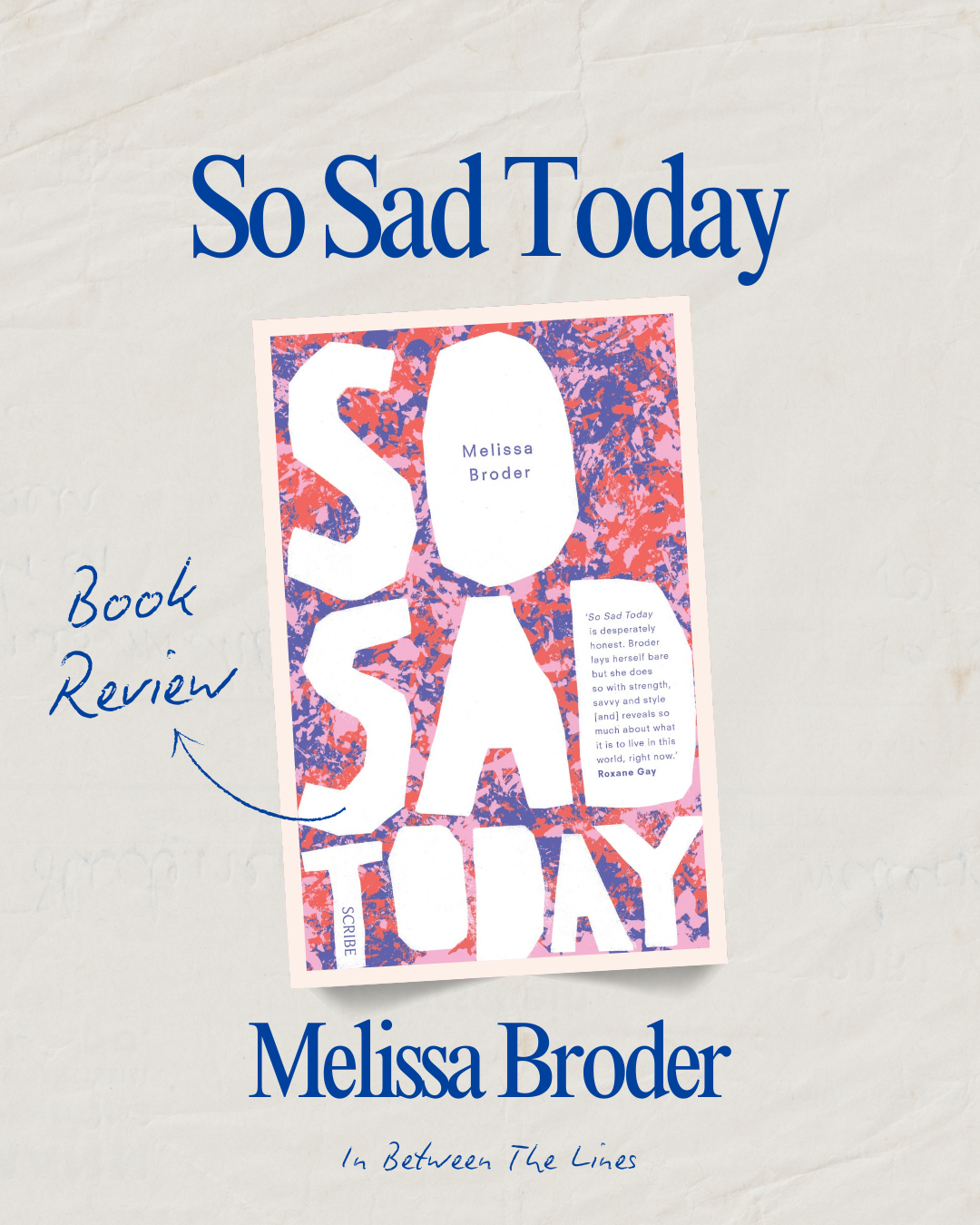
When So Sad Today first appeared, it felt inseparable from the platform that produced it. Melissa Broder’s tweets thrived on immediacy: short, blunt, confessional lines that collapsed irony and vulnerability through humor into a format designed for instant circulation. As the book resurfaces across BookTok and Bookstagram reading lists, it raises a different question. What happens when a voice built for online intimacy is asked to sustain itself in print, and when relatability becomes not just a feature of the writing, but its primary demand?
First published in 2016, at the height of BuzzFeed-era internet culture, So Sad Today expands on the themes Broder explored through her tweets on the account of the same name. Anxiety, depression, eating disorders, and other experiences often kept private are presented in a diaristic, confessional mode that mirrors the rhythms of online disclosure. What once felt immediate and communal online now returns in book form, shaped by the expectations of sustained attention rather than rapid circulation.
The essays often rush along, as if Melissa Broder wrote them primarily to exist. Reading them can feel like scrolling through an online forum, attending a poetry slam, flipping through a diary, or sending screenshots to a friend.
So Sad Today proves that insisting on relatability as a prerequisite for engagement limits how we experience art and media. Broder, an online creator with over 885,000 followers, continues to use X to connect mental health struggles with a sense of community. Her posts, punchy and accessible, remind readers that no one is alone in their struggles. Yet when expanded into book-length essays, the material can feel stretched. Tweets such as “being too much and then regretting it is goth,” “I only love my bed and my bed,” and “being tired is goth” resonate online, but their impact diminishes when read in print.
The collection opens with a four-page story about “eating oneself,” striking in its honesty. That intensity does not return until an essay later in the book, which confronts a vomiting fetish. Both confront taboo subjects in a way that can still shock, even in a cultural moment saturated with confession and story-time content. Broder does shock, though it is sometimes unclear whether the effect comes from the writing or the extremity of the topic. Much of the remaining 200 pages touches on mental health, coping mechanisms, and societal pressures on women.
Broder briefly includes a discussion of joining a protest against police brutality, treating it more like a note than a fully developed reflection.
“Is there a difference between being supportive of other people’s revolutions and turning something tragic into your own experience? I think there is. I feel bad that I brought a Prada bag to a police brutality protest.”
The moment initially evokes laughter, but the following essay disrupts that intimacy and diminishes the sense of enigma.
Broder’s essays often lack nuance. She sometimes sweeps over significant details to move quickly to the next plot point, leaving parts of the material surface-level. Colloquial lines such as “I was like, oh hell no” can undercut heavier subjects, while passages of rich language, like “a compliment in return so as to assuage the implicit guilt of my own existence rubbing up against praise,” may feel excessive. The voice shifts from Reddit-thread style to diary entry to group chat, occasionally within the same essay, which can feel abrupt.
Quantity occasionally outweighs quality. The inclusion of a full sexting transcript and the complete Internet Addiction Quiz, where 20 questions and answers made up the text, highlights this tendency. Repetition undercuts impact: the phrase “I am an eater” weakens with each use, “Help me not be a human being” comes across as forced, and the recurring “(blank): a love story” reads more like draft tweet material than a deliberate literary device. While the material is interesting, its execution sometimes prevents it from achieving its full potential.
There are moments of genuine care. When writing about her partner, Broder slows down, carefully choosing language, and paints a real image. These essays demonstrate her ability to convey her subject fully, though they appear later in the book, after much of the earlier content has tested the reader’s patience.
Ultimately, So Sad Today is a collection that feels both promising and uneven. There is genuine introspection behind many of the essays, but the language and narrow perspective limit the book’s overall impact. The collection reflects the pace and passivity of online consumption, translating fleeting intimacy into print without fully reimagining what sustained attention demands. Its popularity suggests a readership hungry for Broder’s voice, but the book ultimately reveals the limits of simply extending internet voice across a longer literary form.
Further Reading
For more books exploring humor, honesty, and self-reflection, you might enjoy:
- Black Swans by Eve Babitz, a collection of vivid Los Angeles stories blending memoir and fiction.
- Small Things Like These by Claire Keegan, a quiet, morally complex story of ordinary people facing difficult choices.


Leave a Reply