
“I wanted to look up to and admire men, not be like Joan Didion, whose writing scared the hell out of most of the men I knew.” — Eve Babitz
Discovering Eve Babitz and Black Swans
I have known of Eve Babitz for as long as I have known of Joan Didion, yet for just as long, I kept putting them both aside.
It’s the same reason I postpone reading the classics or those “Top Ten Books You Must Read Before You Die.” I save them, afraid of finishing all the best books too soon and worried I’ll reach the end of the list before new ones have time to join it.
Even so, I always knew I would love Black Swans before ever opening it. Something about Eve Babitz made me certain.
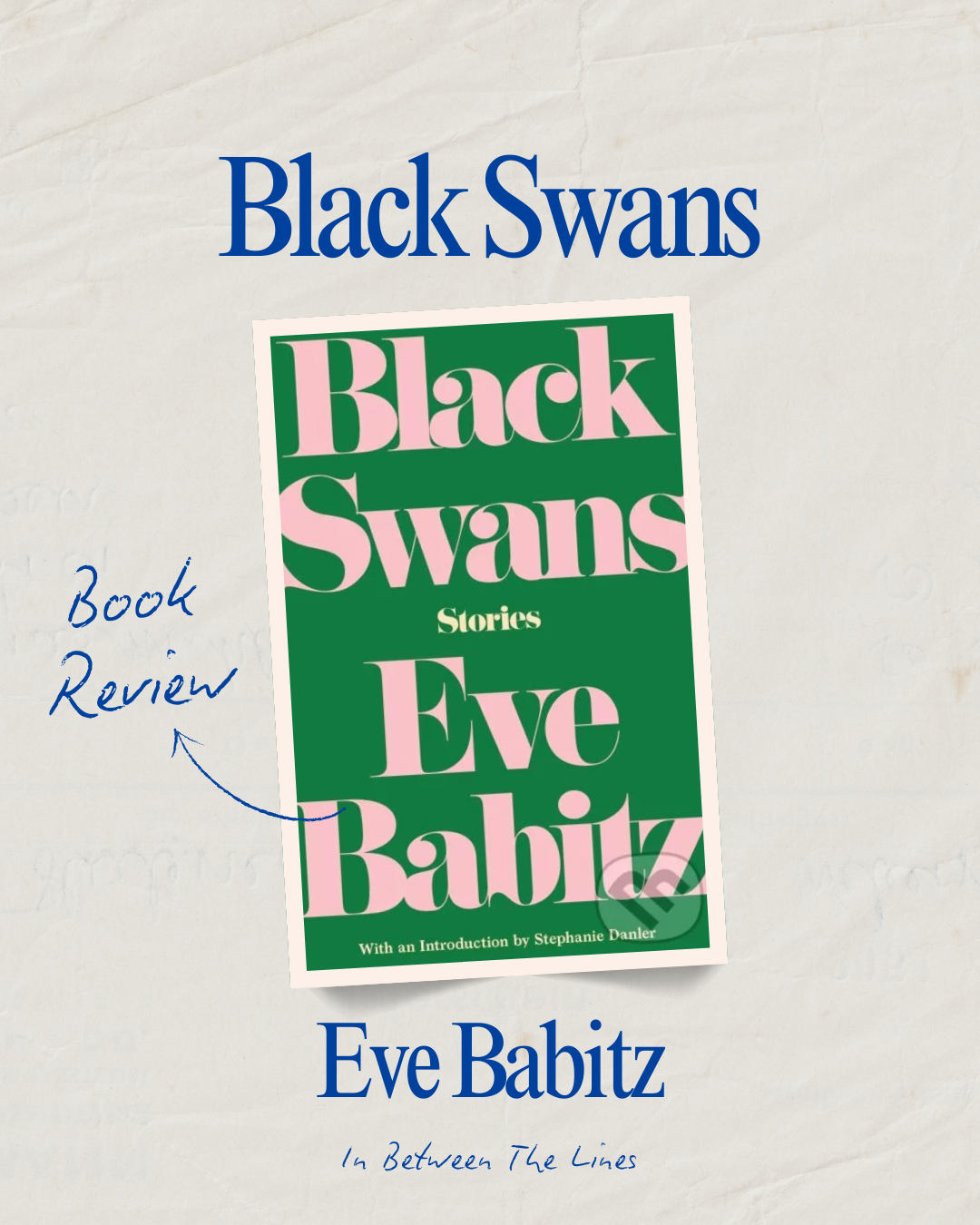
Published in 1993, Black Swans is a collection of nine stories that hover between fiction and memoir. They unfold in the glossy, sun-washed landscape of Los Angeles in the 1990s, a city Babitz knew inside out. Her characters move through parties, studios, and hotel lobbies, chasing beauty, desire, and something like freedom. These stories are not about plot but about presence. They feel like snapshots of life being lived in real time, with Babitz always somewhere in the frame.
Writing, Humor, and the Art of Femininity
Her ideas are so natural and self-assured that they seem inevitable, the product of the kind of woman she was. Her writing is sharp and stylish, and particularly lived-in, as if every sentence comes from observation rather than invention. You can feel her knowing exactly who she is and how the world sees her, and you can sense her amusement in that awareness. Her essays are conversational yet never careless, full of humor, longing, and tenderness for the absurdity of everything around her. Babitz never tries to sound clever. She simply is.
Black Swans, like all of Babitz’s work, belongs to Los Angeles, the glamorous and self-invented city that raised her. The parties, the men, the art, and the quiet heartbreaks are all there. Gender, too, flows through the writing because it has to. The time, the place, and her position within both make it inevitable. Yet what makes Babitz remarkable is how she approaches it. She does not reject femininity or perform it for approval. She inhabits it fully. Babitz examines it, questions it, and often enjoys its power.
She mentions more than once that becoming a writer might make her less attractive to men:
“I loved doing art, but everyone who knew me said, ‘You should be a writer.’ I took this as an insult to my art and not at all practical advice. I didn’t want to be a writer; it would scare men. I wanted to look up to and admire men, not be like Joan Didion, whose writing scared the hell out of most of the men I knew.”
That sentence says more about the gender politics of her time than a dozen manifestos. She is not condemning men, nor apologizing for herself; she is simply telling the truth about what it felt like to be both intelligent and desirable in a world that rarely allowed women to be both.
Beauty and Hollywood Life
Babitz also jokes, “You know, tears can only make a woman more beautiful.” “Not me,” she replies, “tears just wear me out.” Her humor cuts through any illusion of romantic suffering. She refuses the tragic female role and replaces it with a knowing shrug.
Her reflections on beauty and power are never naïve. “For anything beautiful to age gracefully, eternal vigilance is necessary, and Hollywood has not been carefully tended.” She sees the system for what it is, a machinery of image and neglect, yet she still finds ways to make herself luminous within it.
Her memories of Hollywood High capture this double vision perfectly: “From that day forth, I felt Marilyn was my own personal movie star and that anything she did reflected on me directly… Even when she married Arthur Miller and started taking acting lessons, I not only forgave her, I knew she’d be okay once she came to her senses and got divorced.” Babitz’s humor here isn’t cruelty; it is affection mixed with defiance. She idolizes Marilyn while fully understanding the absurdity of needing to.
When she writes about the women around her, she sounds almost baffled by how the world expected them to compete. “None of my women friends were ‘catty,’ even on the Sunset Strip the women playing for large stakes, the gorgeous starlets, had all gorgeous starlet friends. You had to; it was all there was.” Her feminism is instinctive, not strategic. She believes in the solidarity of women who understand the same performance.
From Muse to Artist: Babitz’s Personal Transformation
By the end of Black Swans, she begins to see herself less as a muse and more as an artist. “I decided the thing to do was to be a black swan myself. Stick to my own kind, freakish, beautiful outsiders. Become art, not decoration.” That moment feels like her private declaration of independence, her quiet transformation from subject to author.
“There is no such thing as an ugly woman,” Babitz writes, “there are only women who do not know themselves.” That single line captures her completely. She refuses to hide her charm behind intellect or her intellect behind charm. Both exist together, and she allows them to. That honesty gives Black Swans its pulse. The book is not driven by theory but by experience. Her feminism, if one chooses to call it that, is lived rather than declared.
What lingers after reading is how easily Babitz moves between being glamorous and being self-aware, between confession and performance. The book is full of moments that could have felt small but never do, because she notices everything. She elevates even her most fleeting experiences into something vivid, sometimes heartbreaking, and always alive.
Reading Black Swans today feels like hearing a story you already know, told the way it actually happened. It is not nostalgia; it is presence. It is a woman describing her life as she lived it, not as she wants it remembered.
The Lasting Impact of Black Swans
I put off reading Eve Babitz for years, but now that I have finished Black Swans, I am glad that I waited. After learning to love the mundane again, instead of fighting time that I missed out on, her writing reminded me that clarity is not always about stripping things down; sometimes it is about seeing the world exactly as it is and daring to enjoy it anyway.
Further Reading
For more reflections on contemporary literature and women’s voices, you might enjoy:
- Small Things Like These, a quiet, morally complex story of ordinary people facing hard choices.
- So Sad Today, a sharp and self-aware exploration of humor, honesty, and observation.


Leave a Reply