
The importance of a good translation has once again entered popular culture, bringing the spotlight back to a craft that is often invisible or, at the very least, overlooked.
With Christopher Nolan’s new adaptation of The Odyssey came an unexpected discussion: which English translation captures Homer best?
Composed nearly 2,800 years ago, The Odyssey has never stood still. Since George Chapman’s first complete English translation in 1616, more than sixty modern English translations have been published. Each attempts to answer the same impossible question: how do you recreate one of the foundations of Western literature in a language that did not exist when it was written?
Today, five translations dominate the conversation.
Emily Wilson’s translation has become the most widely discussed in recent years, not only because it was the first English translation of The Odyssey by a woman, published over four centuries after Chapman’s, but because of the precision and clarity of its language. Her work has introduced countless new readers to Homer while reminding us that translation is as much interpretation as it is preservation.
Yet much of the online discussion surrounding these translations has narrowed to a handful of individual choices. Wilson’s use of “Daddy,” the famous “Nobody” versus “No Man” debate, and whether Nolan has chosen to embrace or move away from certain aspects of her translation have become the focal points. They are fascinating examples, but they risk reducing four centuries of literary craftsmanship to a few viral screenshots. Every translation contains thousands of decisions like these, each quietly shaping the way we experience the same story.
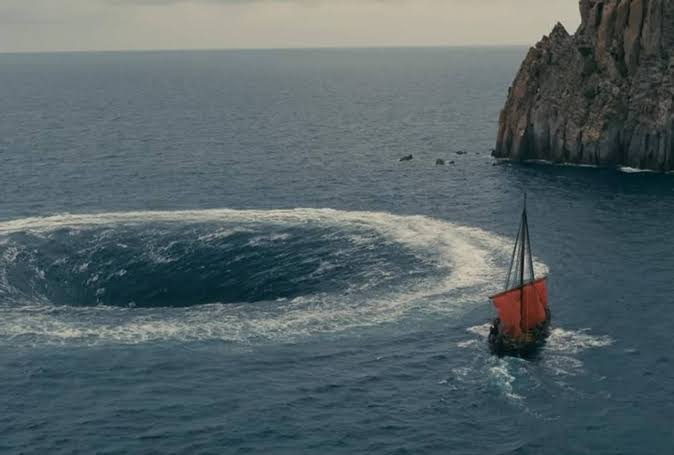
Nolan’s adaptation has now joined that conversation. It has become another interpretation of The Odyssey, one whose creative choices will be discussed, analysed and revisited by future generations, much as we now examine those made by translators over the centuries. Like them, it now becomes part of the story’s own history. Nolan has approached the poem’s epic nature in the only way cinema can: through image, scale and spectacle. Filming The Odyssey entirely with IMAX film cameras is part of that interpretation, translating Homer’s sense of grandeur into a visual language of its own.
That is what makes returning to these interpretations so compelling.
Chapman writes with the splendor of the Jacobean period, prioritising dramatic expression over literal accuracy. By contrast, Richmond Lattimore remains remarkably faithful to the structure and rhythm of the original Greek, producing a version that many consider the closest to Homer’s voice. Robert Fitzgerald leans into the poem’s lyricism, creating a translation that feels hauntingly musical, while Robert Fagles embraces momentum and drama, giving his version an energy that almost feels cinematic. E. V. Rieu abandons verse almost entirely, favouring accessible prose that allows The Odyssey to unfold like a modern novel.
Perhaps none of these translations are objectively superior, but they do ask different questions of the same text.
Should the translator preserve Homer’s syntax, even when it pushes against natural English, or recreate the emotional effect it had on its original audience? Is accuracy measured word by word, or by the feeling left behind once the page is turned?
Translation has never been the simple replacement of one word with another. It is, more often than not, an act of interpretation. Every translator inherits the same Greek text, yet each produces a different Odyssey. The responsibility is not to preserve every individual word, but the work itself. Something that has survived for nearly three millennia. Evidence of what came before us. Proof that storytelling has moved us across timelines, languages and generations. Some versions emphasise poetry, others clarity. Some privilege rhythm, while others prioritise narrative pace. None are entirely objective because every translation requires interpretation.
And maybe that is why this renewed interest matters.
Nolan’s film will undoubtedly introduce a new generation to Homer, even if “it’s 3,000 years old”, but the conversation surrounding it points readers somewhere even more interesting: back to the written page, where the smallest choice of a single word can change how a story survives for another generation.
From word of mouth, to handwritten manuscripts, to the printing press, stories have prevailed. Now, in an age of infinite information and saturated media, we might very well be moving back to the root of what we consume. Back to the source.


Leave a Reply