
Cinema & Literature 2/3
When we talk about writers, we often celebrate the unique voice that shapes a story. Cinema has its own version of this debate, the auteur theory, which asks: who really authors a film?
Introduction
Auteur theory sparked a prominent discourse within the world of cinema that is still debated by artists and cinephiles. From film commentators to critics, the concept of “auteur” has become defined and emphasized in order to distinguish between the appropriation of a film and the artistic imprint that makes a film what it is. Film critics and writers have alluded to the significance of Val Lewton’s control over the films in relation to RKO’s team “the snake pit” (Astruc, 1948; Nochimson, 2006; Pacouret, 2019; Wilson, 2003). While Val Lewton’s nine horror films are a product of RKO Studios, their cultural impact and the reasons for which they are remembered are due to Lewton’s guidance and vision.
The Vision

Alexandre Astruc (1948), a French film critic, stood firmly in his belief regarding the absolute independent efforts of the director within a film’s production:
“Let’s face it: between the pure cinema of the 1920s and filmed theatre, there is plenty of room for a different and individual kin of film-making. This of course implies that the scriptwriter directs his own scripts; or rather, that the scriptwriter ceases to exist, for in this kind of film-making the distinction between author and director loses all meaning. Direction is no longer a means of illustrating or presenting a scene, but a true act of writing. The film-maker/author writes with his camera as a writer writes with his pen.” (p.21-22)
Due to the manner in which Astruc viewed film as a language, the responsibility of the message fell largely on the individual behind the film’s meaning. Astruc explored the role of every component of a film, such as the music and costumes, yet returned to the director as the primary factor in the artistic piece. However, through decades filled with examples of auteurs such as Hitchcock, Tarantino, or Almodóvar, the concept of an auteur has expanded into a category of films whose director or producer had sufficient influence on the film to become their author.
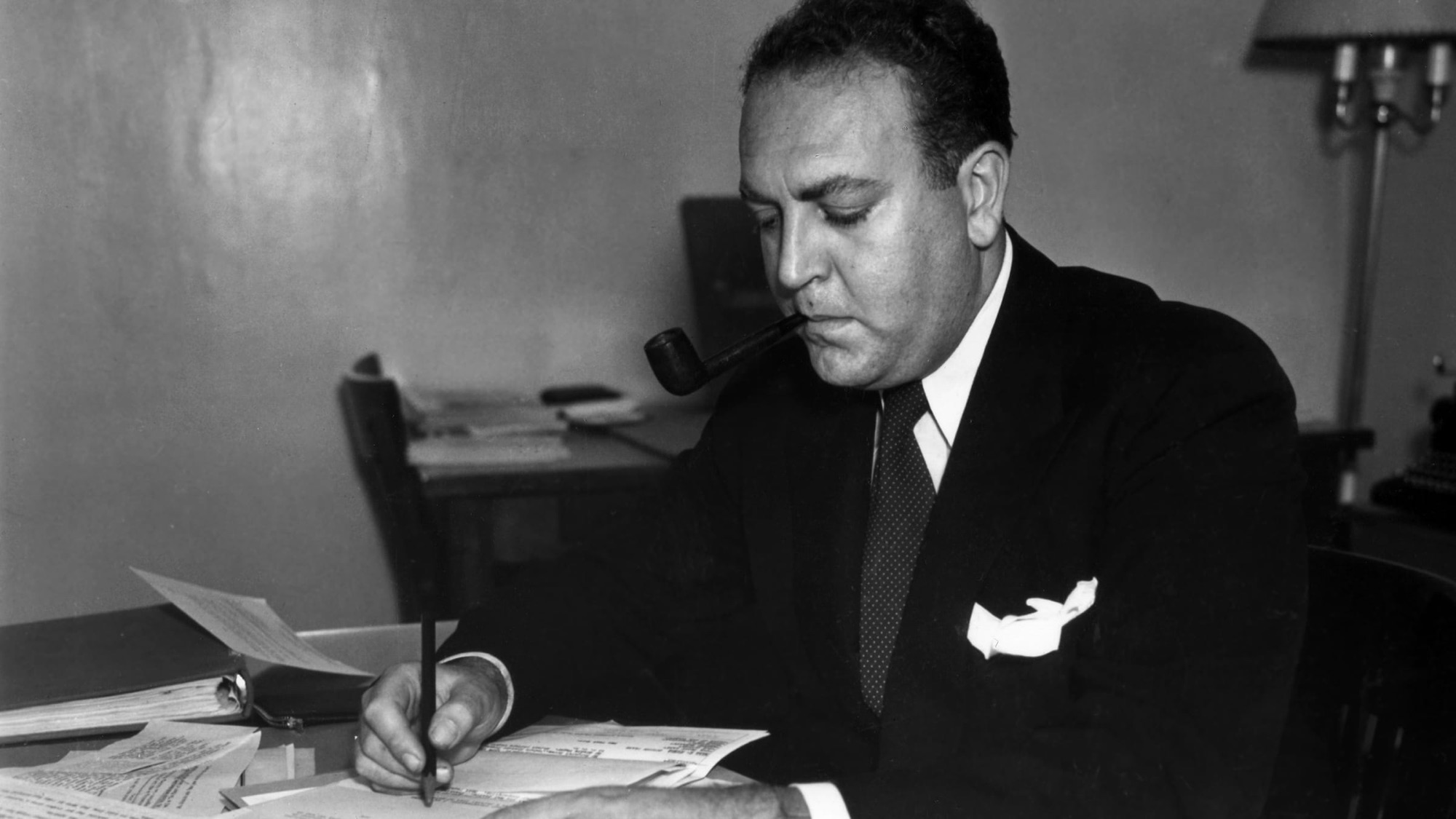
Val Lewton, a novelist, screenwriter, and film producer, created a series of nine horror films for RKO Pictures while working with a group of highly skilled collaborators often referred to as the “snake pit”: Nicholas Musuraca (cinematography), Robert Wise (editor, director), Jacques Tourneur (director), Mark Robson (editor, director), Ardel Wray (screenwriter), Roy Webb (music score), Boris Karloff (actor), and Henry Daniell (actor). Although each collaborator’s contributions were vital, it was Lewton’s overarching vision and guidance that shaped this low-budget series of films into works that were significant in their time and remain memorable today.
Moreover, independent factors within Lewton’s style became recognizable to audiences, making his signature familiar. He often used psychology as a theme and introduced “fear by suggestion” into the post-war horror genre. By using the character’s and audience’s lack of knowledge as a mode to evoke fear, the films took shape within the viewer’s imagination and discomfort. These artistic touches became directly associated with his name, as the essence of the films remained intact regardless of the company they were produced for.
Cat People (1942), directed by Jacques Tourneur, was assigned to Val Lewton, who was left with the task of building the story from the ground up with only the title as guidance. This indicates Lewton’s freedom when creating films for RKO, always maintaining his individual style and sustaining the quality of suspense, psychology, and discomfort.
The Lewton Bus

It is important to view an auteur in relation to the team they worked with in order to fairly understand why a film is the way it is and how to identify the elements that personally enrich it for the audience. Some components of a film stand out more than others. While The Polar Express creates magic with its soundtrack composed by Alan Silvestri, the Spanish auteur Pedro Almodóvar can be recognized within seconds for his artistic compositions, warm colors, and surrealism in films such as Women on the Verge of a Nervous Breakdown. The auteur title becomes an artistic brand that audiences return to, stringing an individual’s work across films as a personal portfolio.
Lewton’s Style

Val Lewton became recognized for his peculiar style of suspense, such as in Cat People (1942), where Irena Gallier roams Central Park in the evening, afraid of being followed. While the audience expected the suspense and camera motion to reveal the stalker, they were shocked to find a bus driving into the scene. This moment created the first cinematic jump scare, later used in a series of horror films, and not seen again until Psycho (1960). It proved Lewton’s influence within the horror genre, as the jump scare has since become a common trope across films.
Nochimson (2006) wrote in Cinéaste: “The brilliance of I Walked with a Zombie was the result of a team effort, particularly the partnership between Lewton and Jacques Tourneur. Nevertheless, on the commentary track, Newman and Jones attribute the defining elements of the film to Lewton; and in this they are correct. The identification of the producer as the creator of the aesthetic, thematic structure, and tone of a film is unusual, but, by all accounts, Val Lewton, one of Hollywood’s very few producer/auteurs.” (p.9)
Auteur Identity: Lewton’s Identity

While every component that builds a film should be considered, it was Val Lewton’s hands-on approach that made the films. He was always polishing the final drafts of scripts, paying tireless attention to detail, and scavenging sets and costumes from what RKO had on hand (p.12).
Ronald W. Wilson (2003) observes that “one of the most distinctive characteristics of Jacques Tourneur’s films are the proliferation and visual style of night scenes.” This raises the question of whether the essence of these works lies in Tourneur’s mastery of shadow or in Lewton’s ingenuity with suspense. If shadows and lighting were the more defining elements, authorship might be attributed to Tourneur. However, Lewton’s stylistic imprint is evident in the first three films: Cat People (1942), I Walked with a Zombie (1943), and The Leopard Man (1943). His use of suspense, his avoidance of gore, and his reliance on psychological tension rooted in the unseen form a consistent pattern. These qualities not only shaped the films associated with his name but also secured his artistic identity within the industry.


Leave a Reply